
PSTN Switch-Off 2027: Rising Costs, Deadlines & Why Businesses Must Act Now

The UK’s telephony landscape is changing irrevocably. The Public Switched Telephone Network (PSTN), the ageing copper-based system that has carried voice calls for decades, is being permanently switched off in January 2027. This transition to fully digital communication is a major milestone for the industry, but it also brings significant price increases and cost implications for businesses that delay migrating from legacy systems.
What Is the PSTN Switch-Off?
The PSTN and ISDN networks are being retired in favour of modern, internet-based voice and communication services. This switch to All-IP technology means every business phone line in the UK will move to digital services such as VoIP or fibre-based solutions by early 2027.
Legacy phone lines, once the backbone of business communications will simply stop working as the infrastructure is decommissioned. This isn’t just a technical change; it impacts how your organisation talks to customers, partners, and colleagues every day.
Why Prices Are Rising Ahead of 2027
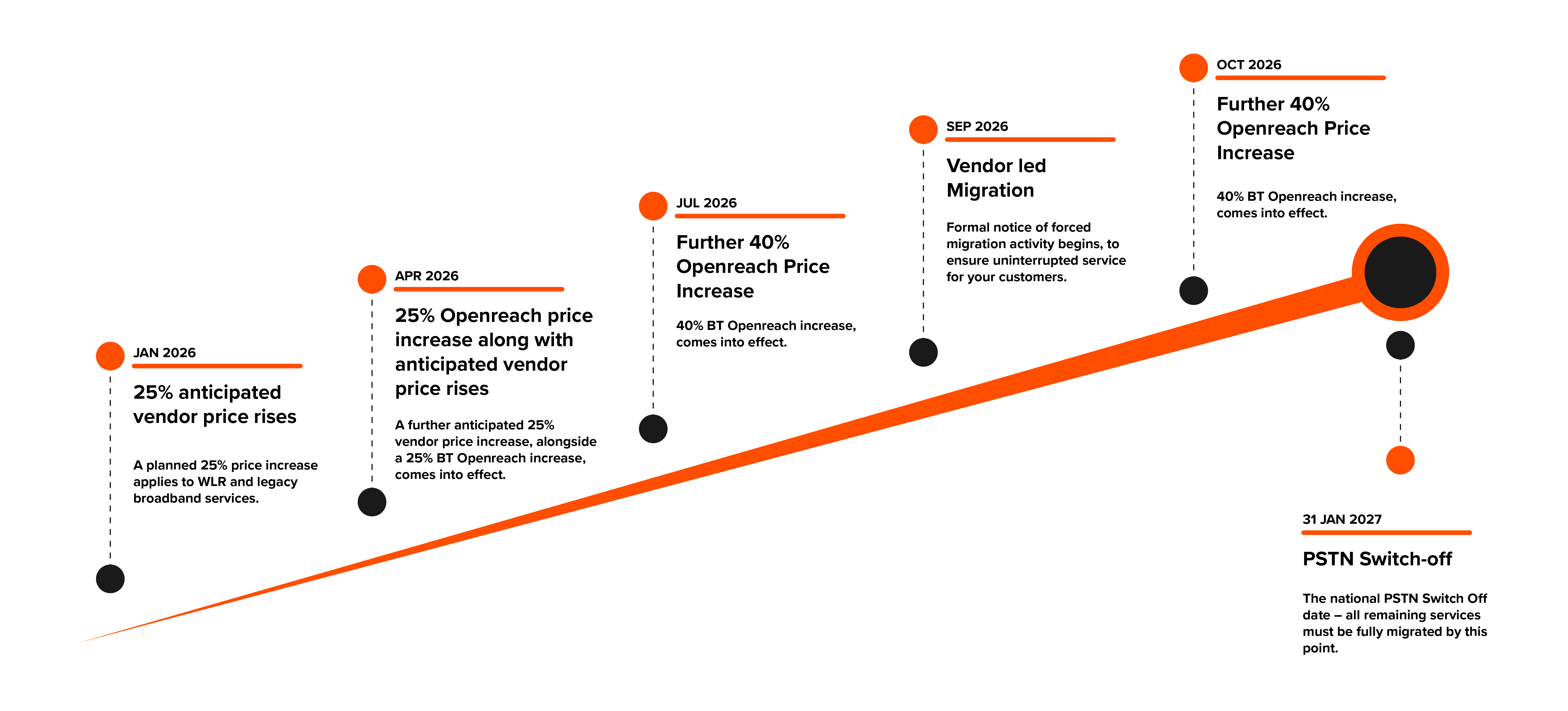
With the switch-off approaching, Openreach the company that operates the UK’s physical network has announced a series of price increases on legacy copper-based products, including Wholesale Line Rental (WLR), which underpins traditional landline services.
These increases are deliberately front-loaded to encourage businesses to switch to digital alternatives and avoid being left on an outdated system:
- April 2026: WLR rental prices increase by 20 %
- July 2026: Prices rise by 40 % (on current levels)
- October 2026: Another 40 % increase, effectively doubling costs over the year compared with today’s rates
While these hikes currently apply at the wholesale level affecting communications providers rather than end customers directly, they will influence what businesses ultimately pay. Providers are likely to pass on increased costs unless services are migrated to cheaper digital alternatives.
The Business Cost of Delay
For businesses that wait until the last minute to migrate:
📈 Higher operational costs — staying on legacy services could become significantly more expensive as suppliers adjust retail pricing to reflect rising wholesale charges.
⏳ Migration bottlenecks — with millions of lines still needing to be transitioned, last-minute demand could overwhelm engineers and service teams, risking outages or delayed installs.
📉 Competitiveness risk — while competitors benefit from faster, more reliable digital communications, delaying businesses could fall behind in customer experience and operational efficiency.
In short, waiting could cost more than just money — it could cost reliability.
The Opportunity Behind the Change
Yes, the PSTN switch-off brings challenges, but it also presents an opportunity to upgrade your communications infrastructure:
🚀 Better call quality & reliability
🌐 Integrated unified communications
💼 Cloud-ready systems that support remote and hybrid work
📉 Lower long-term operational costs
If your business is using traditional phone lines, ISDN, or analogue systems, this transition is the perfect moment to modernise and future-proof your connectivity.
How Telecoms World Can Help
At Telecoms World, we’re supporting businesses through this transformation with tailored Future Proof Solutions from cloud-based VoIP to resilient digital connectivity platforms that ensure you stay ahead of both technical and cost challenges.
Our PSTN readiness assessment will:
✔ Analyse your current setup
✔ Identify where price increases may affect you
✔ Recommend the best digital communication strategy
✔ Deliver a seamless migration plan with minimal disruption
Don’t let rising legacy costs and looming deadlines catch you off guard.
👉 Contact Telecoms World today to book your free PSTN readiness assessment and secure a cost-efficient, future-ready communications platform.

Proud to work with UK leading Businesses

_logo.svg)
.svg)




We are here to help!
Looking for communications and data solutions, our UK based experts are on-hand to answer your questions.
